Listen to THE LIFT
A novella from the Strange Detroit series
Sign up and instantly download the complete package - eBook + Audiobook (3hr 16min)
Speculative fiction author weaving tales of wonder and the impossible through the fabric of everyday life. Creator of the Strange Detroit series where ordinary people stumble into extraordinary and terrifying circumstances.
COMING SOON
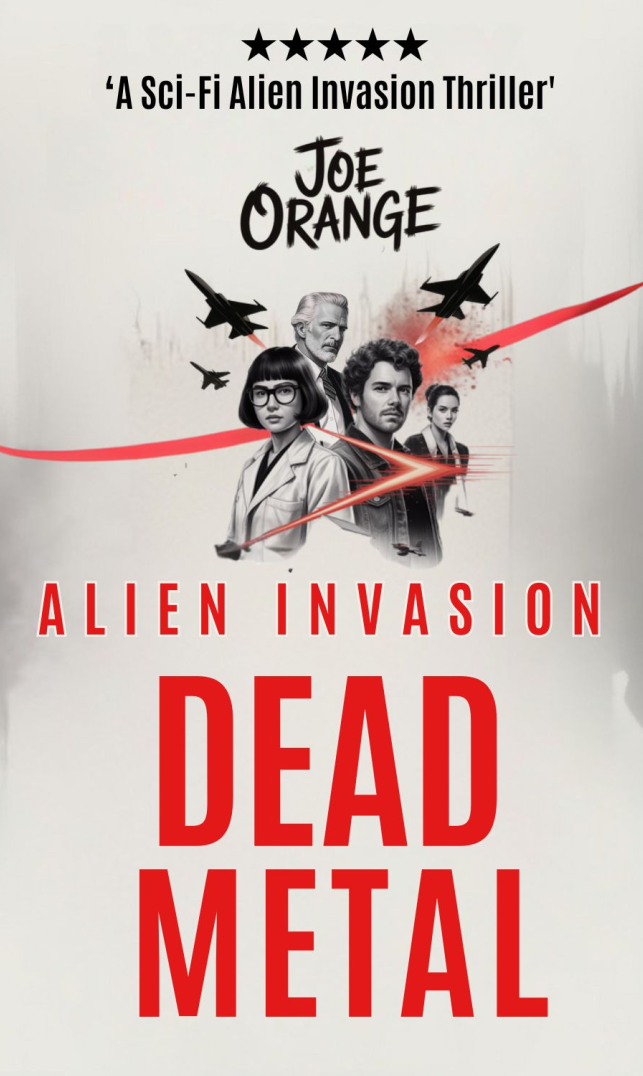
Alien Invasion: Dead Metal
Coming May 2026
Christmas Eve, 1980.
Betty Kobayashi stubs out her cigarette and leans toward the electron microscope. The steel sample shows something impossible: uniform pitting at the sub-micron level.
She goes to make coffee.
When she returns, the pitting has doubled.
What Readers Are Saying
THE STRANGE DETROIT SERIES
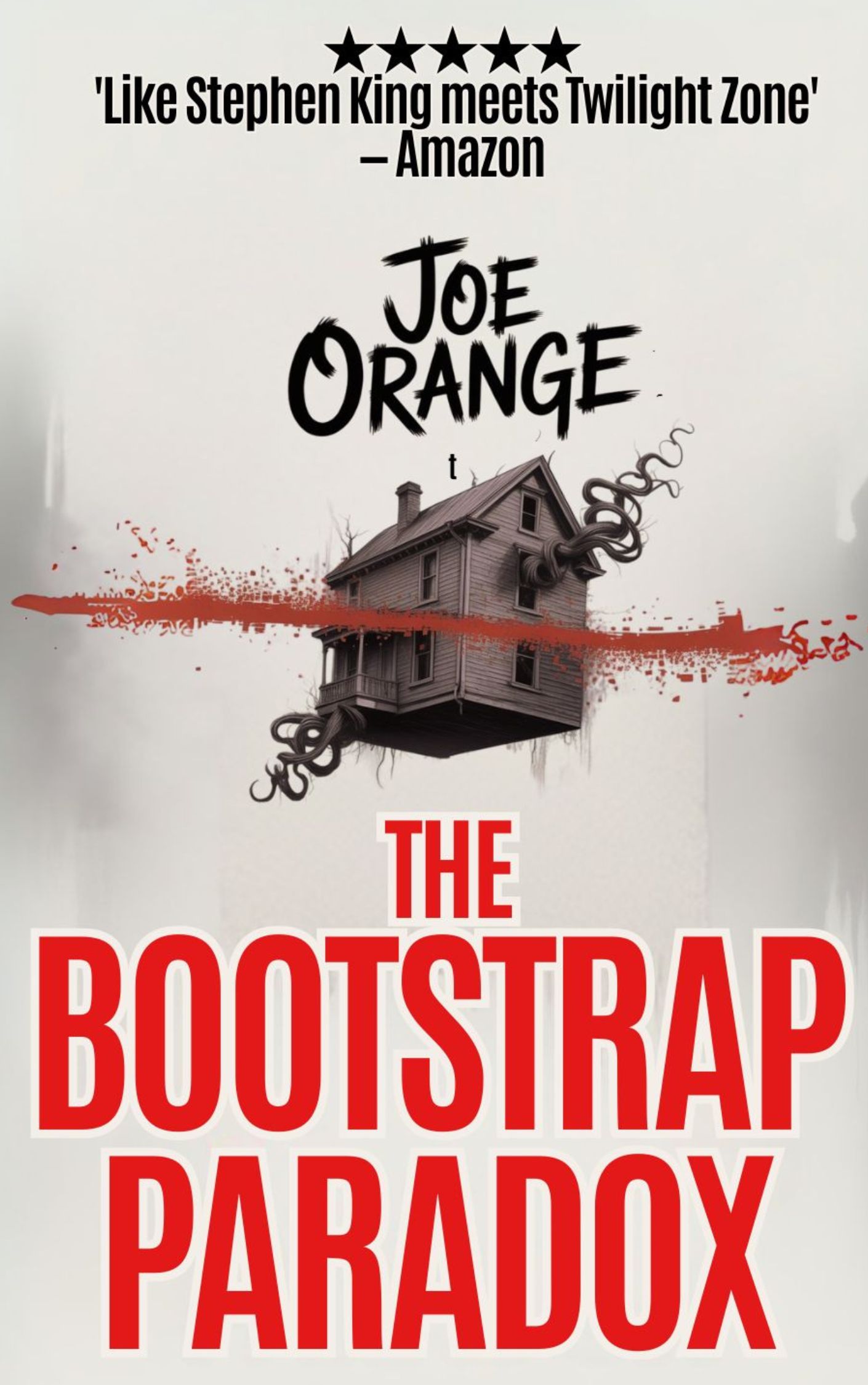
The Bootstrap Paradox
Strange Detroit #1
📖 Ebook | 🎧 Audiobook Available
The wall in front of you is solid. You've measured it. You know its dimensions. But what if you were wrong?
For Fredrick, it was just a house flip. A derelict property hiding a secret door. But behind that door is a room that breaks the laws of physics, a space that shouldn't exist. And it leads to a darkness that stretches into forever.
He has a choice. Board it up, walk away, and convince himself it was a dream. Or step through the hole in his reality and discover what's waiting on the other side.
Also available on Barnes & Noble, Kobo, Apple Books, and other major retailers
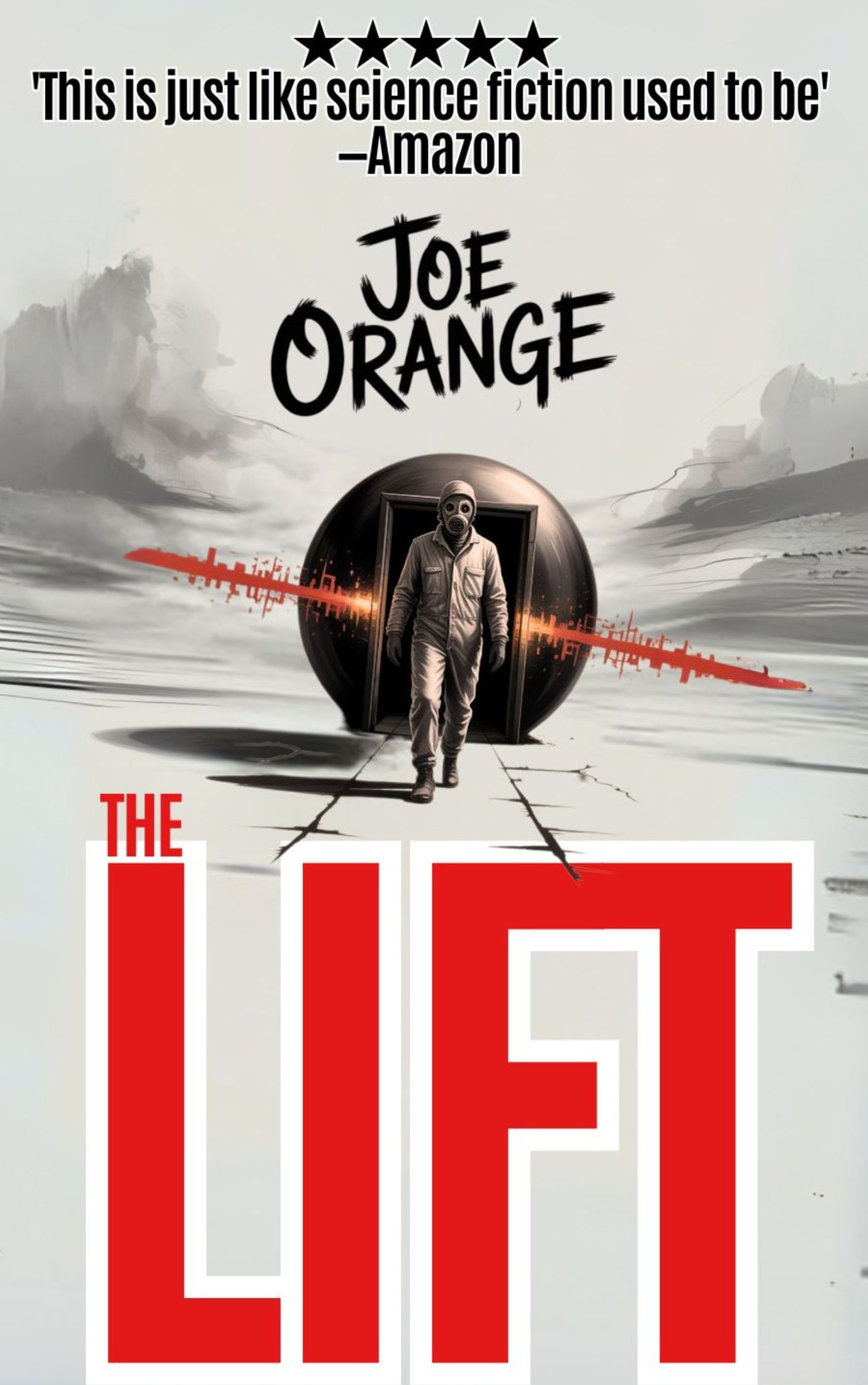
The Lift
Strange Detroit #2
📖 Ebook | 🎧 Audiobook Available
Max needs the money. The job is simple enough. Night shift, dispose of hazardous waste, no questions asked. Just him, a forklift, and sealed drums in a warehouse in Detroit's abandoned industrial district.
At the center stands a black sphere his supervisor calls the lift. When the sphere begins to vibrate, the doors open. A blinding light pours through, and it feels like he's inside a furnace.
Some lifts don't take you up or down. They take you somewhere else entirely.
Also available on Barnes & Noble, Kobo, Apple Books, and other major retailers
FAQ
Not at all! The Strange Detroit series can be read in any order. Think of them as part of a shared world where strange things happen, like Tales from the Crypt, but instead of the Cryptkeeper, I had this idea for a character called the Motor Head. The series is still in its early stages, but more stories are definitely coming!
I have four Strange Detroit novellas written that just need final editing. There's one about an alien invasion in Detroit, a detective solving a strange mystery, a psychiatrist who's part of a doomsday team assembling during a world-ending event, and Red Foam. I'm thinking of collecting them like Stephen King's Four Past Midnight. Maybe Three Past Midnight? Still working on the title. I'm planning to release this collection in 2026.
I write stories where strange things happen. I've always been fascinated by anthology storytelling: The Twilight Zone, The Outer Limits, and as a kid, Tales from the Darkside and Monsters. I still remember watching Creepshow in my sleeping bag as a kid. That's what I want to bring to the table: self-contained stories that entertain. Though I'm working on my alien invasion trilogy at the moment, in general I write to entertain myself and other people!
This is a strange story. Up until the age of 24, I had never even thought about writing. I really used to love stories and was always a daydreamer though.
What happened is I moved away from home to another town and ended up in a flat with no furniture, nothing but a mattress. A family member told me their computer was broken, something with the power cord. I had a small background in computers, so I thought I'd try fixing it. They sent it to me and I got it working.
All that was on the computer was MS Word. No games, nothing. And in my room was nothing but a mattress and the sound of the sea outside. There was no TV, no radio. Just a wall to look at and this computer. That's when I thought, "I'm going to try to write a book."
I started writing and really enjoyed it. It was the most random thing in the world. Or maybe it was fate, depending on how you look at it. That week, I completed my first novel. Looking back, it was a simple adventure story, but I liked the way I could move words around. Of course, that was more of an organic pantser novel. I tend to plot a lot more these days and think more about structure.
I write everything out as a screenplay first. My novel Alien Invasion: Dead Metal was 250 pages of screenplay. Then I dictate that screenplay into prose. After that, I break everything down into chapters using Novelwriter (a wonderful open-source program), then go chapter by chapter revising, adding, taking away, and getting clarity of plot. Bird by bird, so to speak, until I'm done.
I'm what's called a "pantser" when writing the screenplay, although I do know roughly where things are going. The dictation method lets me plot as I go, using a different part of my brain so it doesn't get boring. In the past I've pantsed entire novels from start to finish without the screenplay stage, but as a pantser of prose, I used to write myself into walls with no way out. You live and learn. I've been doing this for over twenty-five years, so I've had time to refine the workflow.
My current setup is a standard computer running Linux Mint with Novelwriter and KIT Scenarist for screenplay software. For dictation, I use a Windows computer that's air-gapped with Dragon NaturallySpeaking. I'm aware there are AI programs like Otter, and I use these sometimes, but I like that you can say "new paragraph" in Dragon. Nearly everything that comes out of dictation needs to be rewritten anyway. It's mainly just getting the bones out.
Over twenty-five years. For about ten years I worked on a fantasy novel that will come out one day under my pen name. These days I fly solo. Just me. So all the mistakes I own. But it's a lot of fun!
I used to have an agent and went through the traditional publishing route: submissions, the whole process. I think agents are really useful and traditional publishers can help a lot with nearly everything. But I'm not getting any younger, and I figured I'd try my hand at it myself. So I do everything from cover design (I have a background in design) to getting the book ready for publication. I make mistakes, but the universe likes that because everything is more entertaining.
I have a novella on my desk that will explain that. You see, there is a portal from my house in New Zealand to Detroit. I did live in the United States for a time though and really enjoyed it. One of the best things about America is its fast food. New Zealand fast food pales in comparison.
Unfortunately not. I live in New Zealand, so shipping would be impractical. Though I am planning on living somewhere else one day!
If you enjoyed one of my books, I'd love it if you left a review on Amazon or Goodreads. Reviews really help other readers discover the Strange Detroit series!
I'd love to! Feel free to reach out using the contact button below.
Not really. I used to do some painting about twenty years ago, but these days I mainly write. I don't tend to do anything else. Although there's still time!
Absolutely! Use the contact button below and I'd love to hear from you.
I take off the headset and get ready for work, of course!
Get In Touch
Have a question about my books? Interested in a review copy or interview? I'd love to hear from you.
Contact Me